Hibiscus Roselle - Cultivation, Taste, Benefits, and Uses
Hibiscus (Roselle): Cultivation, Taste, Characteristics, and Uses
-
Introduction to Hibiscus Roselle
Hibiscus, commonly known as roselle (*Hibiscus sabdariffa*), is a tropical plant valued for its vibrant red calyces and versatile applications. Although it belongs to the hibiscus family, roselle is grown primarily for the fleshy calyx that develops around the seed pod after flowering. These deep-red calyces are harvested and processed for herbal tea, beverages, food ingredients, botanical extracts, and cosmetic formulations.
Hibiscus is well suited to warm, sunny climates and is cultivated in many tropical and subtropical regions. The plant generally grows best in well-drained soil, with plenty of sunlight and enough space for its branches to develop. It is commonly raised from seed. Depending on the variety, growing conditions, and local climate, plants may begin flowering around three to four months after sowing.
2. Hibiscus Roselle Cultivation and Harvest Season
Roselle is a warm-season crop that performs best in temperatures typical of tropical and subtropical climates. In many growing areas, farmers sow Hibiscus at the beginning of the rainy season so that young plants can establish themselves with sufficient moisture. As the plants mature and the days become shorter, flowering and calyx development begin. The exact planting and harvest calendar varies by location, rainfall, variety, and farm management.
In Thailand and other tropical production areas, the main Hibiscus harvest often takes place toward the end of the rainy season and into the cooler, drier months. In some locations this may fall between October and January, although the timing can differ from one growing region to another. This seasonal pattern makes local weather and planting schedules important when planning a consistent supply of Hibiscus.
After the flowers bloom, the petals eventually fall away and the fleshy red calyces continue to develop around the seed pods. The calyces are generally ready to harvest when they have reached a suitable size, are plump, and have developed a strong red colour. Farmers typically use scissors or pruning shears to remove mature calyces while taking care not to damage the plant. Regular harvesting encourages the collection of developing calyces throughout the harvest period.
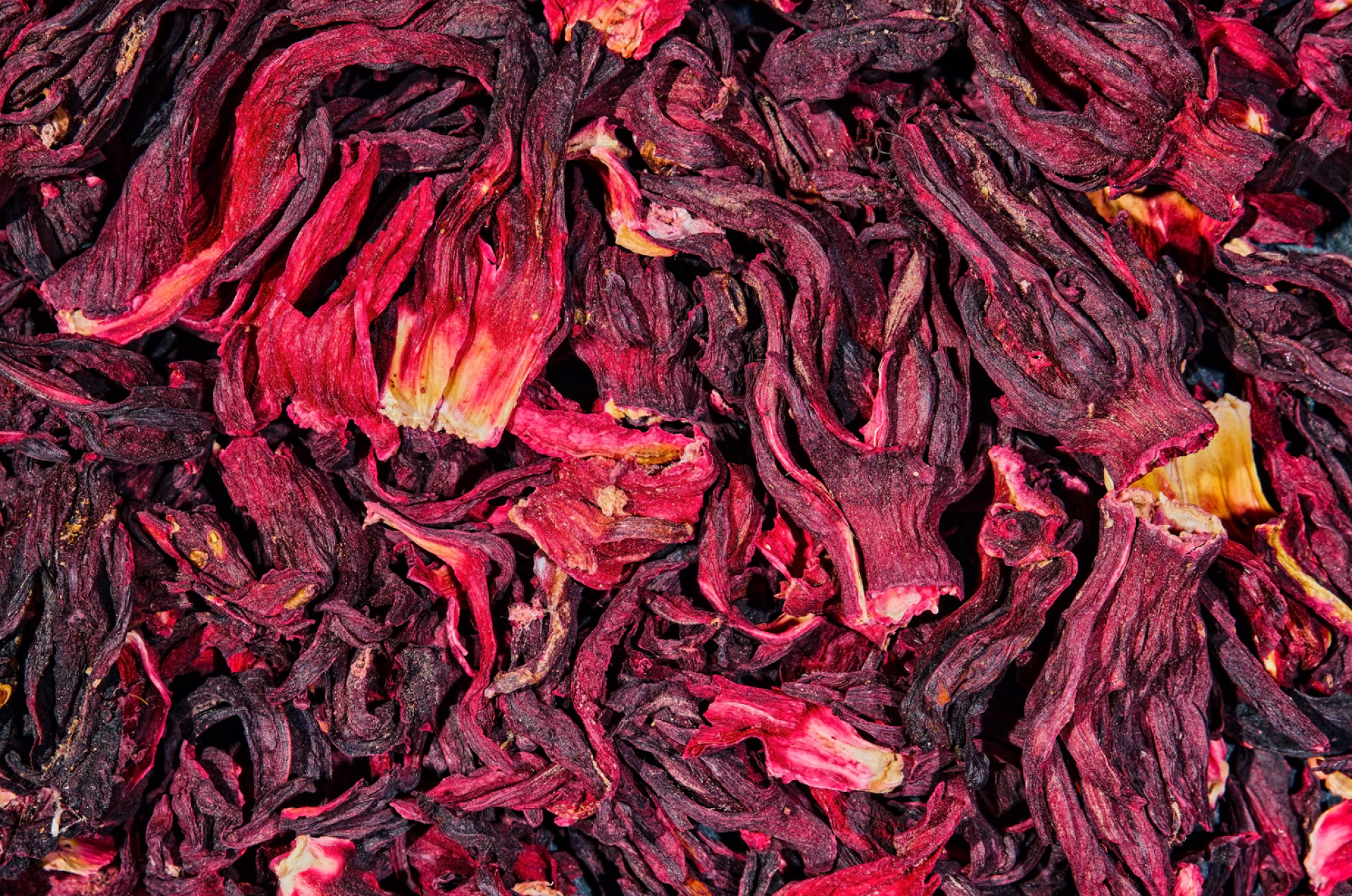
For most tea and ingredient applications, the red Hibiscus calyx is the useful part of the plant. It is separated from the central seed pod, which is not normally included in dried calyx products. Processing soon after harvest is important: fresh Hibiscus contains moisture and can deteriorate if left in warm, humid conditions. Prompt cleaning and drying help preserve its colour, aroma, and quality. Commercial processing should use controlled, hygienic drying conditions and suitable moisture specifications to support safe storage and consistent product quality.
3. Taste and Characteristics of Hibiscus
Hibiscus is recognised for its naturally tart, refreshing flavour, often compared with cranberry, red currant, or sour cherry. Its bright acidity makes it suitable for products that need a fruity taste without relying entirely on added flavourings. When brewed as an infusion, dried Hibiscus calyces produce a vivid red to deep ruby-coloured liquor, depending on the raw material, concentration, water conditions, and brewing method.
The colour is one of the most distinctive characteristics of Hibiscus. Its red pigmentation is associated mainly with naturally occurring anthocyanins, a group of water-soluble plant pigments. These compounds contribute to the attractive red appearance of Hibiscus infusions and extracts. The colour can vary with pH: acidic formulations tend to retain red or pink tones, while changes in formulation conditions may alter the final shade.
Dried Hibiscus is available in several forms to suit different manufacturing needs, including whole calyces, cut and sifted pieces, tea-cut grades, powder, and concentrated extracts. The appropriate form depends on the intended use, extraction process, particle-size requirements, and desired colour or flavour intensity. As with other botanical ingredients, quality is influenced by variety, growing conditions, harvest maturity, drying, storage, and handling.
Applications of Hibiscus Roselle in Food and Beverages
1. Herbal Tea and Infusions
One of the best-known uses of Hibiscus is herbal tea. The dried calyces can be brewed on their own or blended with ingredients such as lemongrass, ginger, rosehip, mint, and fruit pieces. Hibiscus tea is enjoyed both hot and cold, making it suitable for tea bags, loose-leaf blends, instant tea products, and ready-to-drink concepts. Its naturally tart flavour and red infusion can provide both taste and visual appeal.
2. Beverages and Drink Concentrates
Hibiscus is also used in juices, sparkling drinks, syrups, cordials, iced teas, kombucha-style beverages, and beverage concentrates. Its refreshing acidity can complement citrus and berry flavours, while its red colour helps create an appealing appearance. Manufacturers may use dried calyces, water-based infusions, or standardised extracts depending on the product format and production process.
3. Natural Colouring for Food
Hibiscus extracts are of interest to food developers looking for plant-derived colour ingredients. Anthocyanin-rich extracts can contribute red, pink, or purple tones to selected food and beverage applications. Potential uses include confectionery, desserts, fruit preparations, sauces, and beverage formulations.
The final colour depends on pH, heat exposure, light, processing conditions, and interactions with other ingredients. Product developers should therefore evaluate the extract in the actual recipe and confirm that the intended use complies with the food regulations in each target market. Hibiscus extract should not automatically be treated as a universal replacement for every synthetic or permitted food colour.
Hibiscus Applications Beyond Beverages
4. Botanical Extracts and Functional Food Formulations
Beyond traditional infusions, Hibiscus can be processed into liquid or powdered botanical extracts for use in ingredient blends and selected food formulations. Extract specifications can be tailored to the intended application, such as colour strength, anthocyanin content, solubility, carrier system, and microbiological requirements. Buyers should review the technical specification, certificate of analysis, and applicable regulatory documentation before selecting an ingredient.
5. Cosmetics and Personal Care
Hibiscus is also used as a botanical ingredient in cosmetics and personal-care products. Depending on the extract type and formulation, it may be incorporated into facial masks, creams, lotions, shampoos, conditioners, soaps, and other products that feature botanical or plant-based ingredients.
Its naturally occurring pigments and plant-derived compounds make it interesting for product concepts focused on botanical identity and visual appeal. Cosmetic suitability, stability, colour performance, and skin compatibility should be assessed in the finished formulation.
6. Other Product Development Opportunities
The versatility of Hibiscus creates opportunities across food, beverage, wellness, and personal-care markets. It can be explored in fruit blends, powdered drink mixes, dessert ingredients, bath products, and other botanical concepts. The best ingredient format will depend on the desired sensory profile, colour, processing conditions, and target-market requirements.
Selecting Quality Hibiscus Ingredients
For manufacturers and ingredient buyers, consistent quality is essential. Important considerations include botanical identity, country and region of origin, harvest and processing practices, colour and aroma, moisture level, foreign matter, microbiological quality, pesticide-residue compliance, and traceability.
Depending on the application and destination market, buyers may also require a product specification, certificate of analysis (CoA), pesticide-residue report, allergen statement, and relevant food-safety or certification documents.
Choosing the right form—whole calyces, cut pieces, powder, or extract—can help optimise production efficiency and finished-product performance. Early discussion of the intended application, target colour, flavour profile, and regulatory market can make ingredient evaluation more effective.
A Versatile Botanical Ingredient
From cultivation and seasonal harvesting to its distinctive tart taste and brilliant red colour, Hibiscus roselle is a versatile botanical raw material. Its established role in herbal tea and beverages, together with opportunities in natural food colouring, botanical extracts, and cosmetics, makes it an ingredient of interest to product developers across multiple industries.
With appropriate sourcing, processing, and quality control, Hibiscus can support a wide range of product concepts.